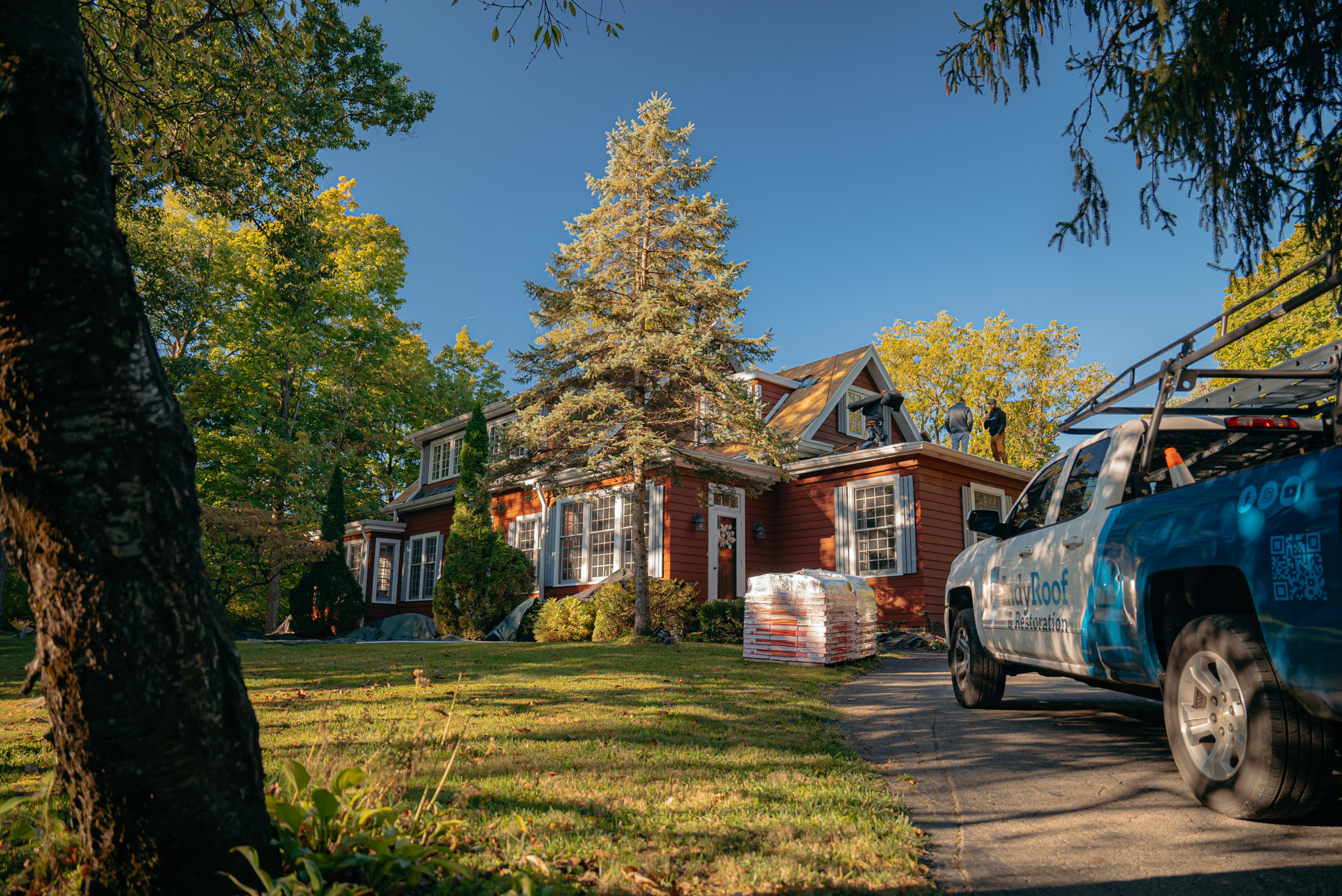
Quick Answer: First Steps After a Tree Hits Your Roof
If a tree just fell on your home in Waynetown, do these five things in order before you call anyone except emergency services:
- Get everyone out of rooms directly under the impact zone.
- Shut off power to that area if you see sagging ceilings or water near fixtures.
- Take photos and video from the ground, never climb up.
- Call your insurance carrier to open a claim and request a claim number.
- Call a local roofer for an emergency tarp, ideally within 24 hours.
Do not sign anything from a tree removal crew or roofer that shows up unsolicited. You have time to choose. For a deeper walk through the claim side, our guide on storm damage insurance claims covers documentation and adjuster meetings in detail.
Types of Damage a Fallen Tree Causes
Not every tree strike is a total loss. The damage usually falls into one of four categories, and the category drives whether you are looking at repair or replacement.
| Damage Type | What You See | Typical Outcome |
|---|---|---|
| Surface scrape | Branch dragged across shingles, granule loss, no puncture | Spot repair, 1 to 3 squares |
| Shingle puncture | Limb broke through shingles into underlayment | Section replacement, possible decking patch |
| Decking break | Visible hole, daylight in attic, wet insulation | Structural repair plus roof section |
| Truss or rafter strike | Sagging roofline, cracked framing, interior ceiling damage | Full replacement, possible engineering review |
How We Decide Repair vs Replacement
The line between a repair and a replacement is not arbitrary. We use a few practical thresholds when we inspect:
- Damage covers more than one roof plane or 30 percent of a single plane.
- The decking is broken across more than two rafter bays.
- Shingles are over 15 years old and a color match is unlikely.
- Framing members are cracked, twisted, or displaced.
If two or more of those are true, replacement usually makes more sense than chasing repairs that will not blend. If only the first applies and the rest of your roof is healthy, a clean repair is the right call. Our roof repair team handles tree strike sectional work weekly during storm season.
Hidden Damage to Look For
The visible hole is rarely the whole story. After Waynetown Roofing pulls back the tarp, we usually find collateral issues that the homeowner missed from the ground:
- Lifted shingles two or three courses away from the impact, where the tree flexed the deck before it settled.
- Cracked flashing at chimneys and walls within 10 feet of the strike zone.
- Compressed attic insulation that holds water and hides slow leaks for weeks.
- Bent or detached gutters that no longer pitch correctly toward the downspout.
- Hairline cracks in drywall on the floor below, often near light fixtures and corners.
Document all of these for the adjuster. Items that are not in the original scope of loss are easy to miss and harder to add later.
Timeline: What the Next 30 Days Look Like
| Day | Action | Who Handles It |
|---|---|---|
| 0 to 1 | Emergency tarp, claim opened, photos filed | You and your roofer |
| 2 to 5 | Adjuster inspection, scope of loss written | Insurance carrier |
| 5 to 10 | Estimate review, supplements if needed | Roofer and adjuster |
| 10 to 21 | Material order, crew scheduling | Your roofing contractor |
| 21 to 30 | Tear off, decking repair, install, final inspection | Roofing crew |
Heavy storm seasons can stretch this timeline by a week or two, mostly during material ordering. If your shingle line is on backorder, your roofer should tell you within the first five days so you can decide whether to wait or pick a comparable product the carrier will approve.
Preventing the Next One
You cannot stop every storm, but you can shorten the odds. A few habits we recommend to Waynetown homeowners:
- Trim limbs that hang within 10 feet of the roof line every two to three years.
- Remove obviously dead or leaning trees before storm season.
- Consider Class 4 impact resistant shingles on your next replacement, especially if you have mature oaks or ash nearby.
- Keep gutters clear so wind driven water from a damaged area drains instead of pooling.
- Walk your property after every wind event over 50 mph and look up.
- Have a certified arborist evaluate any tree taller than your house every five years.
Materials That Hold Up Better
If you are already replacing, the upgrade math is friendlier than people expect. Class 4 shingles often earn an insurance discount, and standing seam metal sheds branches better than three tab. Synthetic underlayment and a peel and stick ice barrier across the full deck add another layer of protection if a future limb does break through. We can price all of these side by side during the inspection so you see the real cost difference, not just sticker prices.
Why a Tree Strike Needs Faster Action Than a Normal Leak
A fallen tree is not the same kind of problem as a slow roof leak, and it does not afford the same patience. A tree strike usually breaks the roof open in one event, exposing the interior to rain immediately and often compromising the structure underneath at the same time. Every hour the roof sits open, water pours into the attic, the walls, and the living space, multiplying the damage. That is why the first day after a strike matters so much more than with an ordinary leak: the priority is safety, then getting the opening covered, then documenting everything for the claim. A Waynetown homeowner who treats a tree strike with the urgency of an emergency, rather than scheduling it like routine repair, ends up with far less damage to deal with.
Direct Hit Versus Glancing Blow
Not every tree contact is equal, and the difference shapes the whole response. A direct hit, where a trunk or major limb comes down squarely on the roof, often punches through the decking and can damage rafters or trusses, which makes it a structural matter as much as a roofing one. A glancing blow, where a branch scrapes across or clips an edge, may look alarming but frequently amounts to surface damage that is straightforward to repair. The trouble is that the two can look similar from the driveway, and a glancing blow can still hide a cracked rafter or a punctured deck. That is why we assess a Waynetown tree strike up close before calling it minor, because the cost of guessing wrong on a structural hit is far higher than the cost of looking.
Insurance: What Is Covered and What Is Not
Most Waynetown homeowner policies cover sudden tree damage, but the details matter.
Generally Covered
- Roof, siding, and gutter damage from the tree itself
- Tree removal from the structure (often capped at 500 to 1500 dollars)
- Interior water damage from the resulting opening
- Emergency tarping and board up
Often Not Covered
- Removal of a fallen tree that did not hit a structure
- Damage from a tree the insurer deems neglected or dead before it fell
- Stump grinding and landscape restoration
- Code upgrades unless you carry an ordinance and law endorsement
What If the Tree Came From a Neighbor's Yard
This is the question we hear most often after a windstorm. In almost every case, your own policy handles the claim regardless of which yard the tree grew in. Insurers only pursue the neighbor (subrogation) if the tree was clearly dead or the neighbor had been warned in writing. Going after a neighbor directly rarely speeds anything up and tends to sour the relationship. File on your policy first and let the carriers sort out fault behind the scenes.