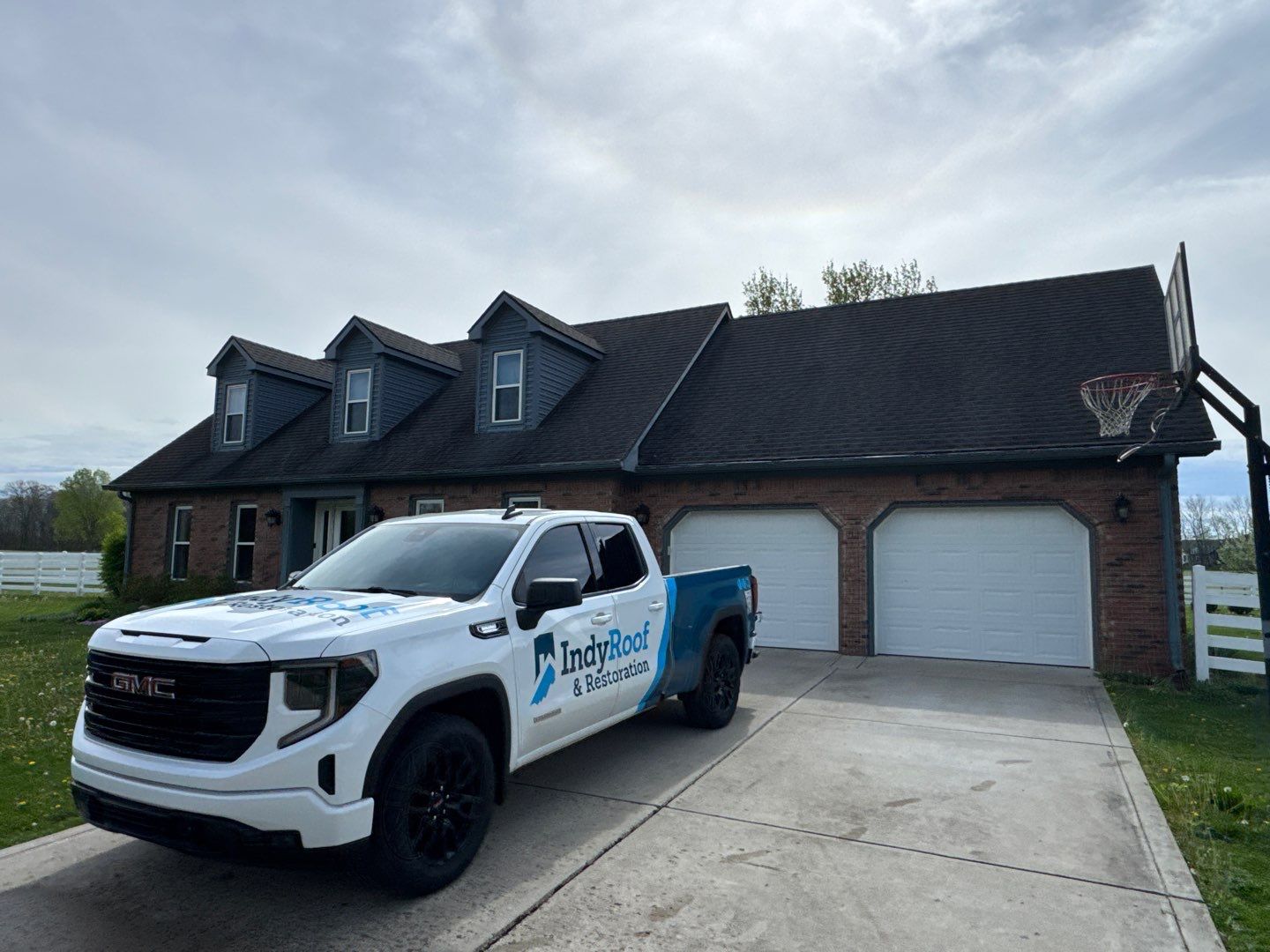
How to Tell If You Need a New Roof
Deciding whether you need a new roof is really a process of reading the signs in order and weighing them against the roof's age. For a Waynetown homeowner, working through it step by step is more reliable than reacting to a single observation or waiting for a leak. The goal is to determine whether the signs you are seeing add up to a repair or a replacement, and to act at the right time. Here is a sequence for assessing your roof, from the easiest factors to check to the professional inspection that confirms the decision.
Start With the Age
Begin with the roof's age, since it frames everything else. Most asphalt roofs last roughly twenty to thirty years depending on the shingle, so find out when yours was installed and compare it to that range. A roof well within its expected life starts with a presumption toward repair, while a roof near or past the end starts leaning toward replacement. Closing documents, permit records, or a previous owner may pin down the date. For a Waynetown homeowner, establishing the age first gives the right context for interpreting every sign you then look at, and often points the decision before you even climb a ladder.
Factor In How Long You Will Stay
Consider your plans for the home. If you intend to stay for many years, replacing a failing roof protects the home and gives you a full lifespan roof to live under, while repeated repairs on a worn roof become a recurring burden. If you are selling soon, the roof's condition affects offers, inspections, and insurability, so addressing it can smooth the sale. For a Waynetown homeowner, how long you will own the home helps decide whether to invest in replacement now or manage with repairs, and it is a sensible factor to weigh alongside the physical signs.
Check for Granule Loss
Look in the gutters for granule buildup, which is a convenient and reliable indicator. The protective granules shed as shingles age, so heavy accumulation in the gutters and bald spots on the roof mean the shingles are wearing out, with the exposed asphalt aging faster. Some loss is normal on a newer roof, so weigh it against the roof's age. For a Waynetown homeowner, granule loss on an older roof is a meaningful sign that the shingles are nearing the end, and it adds weight to the case for replacement when combined with the roof's age and other observations.
Get a Professional Inspection
Ground the decision in a professional inspection. A roofer assesses the shingles, flashing, decking, and overall condition, including what is not visible from the ground, and gives an honest read on whether the roof needs repair or replacement, along with an estimate. This turns your own observations into a confident, informed decision. For a Waynetown homeowner, the inspection is the step that confirms or corrects your read of the signs, and it is far more reliable than deciding from the ground alone. Waynetown Roofing provides that assessment so the choice rests on the roof's real condition.
Look at the Shingles
Next, assess the overall condition of the shingles, ideally from the ground with binoculars or via a professional rather than by climbing up. Look for curling, cupping, cracking, and missing shingles, and note whether these are isolated to one area or spread across the roof. Isolated issues suggest a repair, while widespread shingle problems suggest the field has aged out and points to replacement. For a Waynetown homeowner, the shingles are the most accessible and informative thing to evaluate, and whether their wear is contained or widespread is a major input to the repair or replace decision.
Make the Call
Finally, make the decision based on everything you have gathered: the roof's age, the visible and interior signs, the repair history, and the professional assessment. There is no single sign that decides it, but the pattern usually becomes clear when you read them together. A failing, aged roof with multiple signs calls for replacement, while a younger roof with an isolated issue calls for a repair. For a Waynetown homeowner, acting on a clear eyed read of the signs, confirmed by a roofer, means addressing the roof at the right time and avoiding both premature replacement and the cost of waiting too long.
Weigh Repair vs Replace
Now bring the signs together to weigh repair against replacement. Isolated damage on a roof with life left points to a repair, while widespread wear, structural signs, multiple interior leaks, or any of these on a roof near the end of its lifespan point to replacement. The decision rests on the severity and spread of the signs combined with the roof's age. For a Waynetown homeowner, this is where the individual observations resolve into a direction, and it is worth being honest about whether you are seeing isolated issues or a roof that has broadly worn out.
Consider Recent Storms
Factor in any recent severe weather. A storm that caused isolated damage on a sound roof may only need a repair, while significant hail or wind damage across the roof, or storm damage on an already aging roof, can mean replacement, and insurance may help with storm damage. If a storm has hit, a post storm inspection that documents the damage is worthwhile. For a Waynetown homeowner, recent storms can be the event that tips a worn roof into needing replacement, and assessing the damage promptly also preserves the option of an insurance claim while the cause is clear.
Inspect Inside the Attic
Go into the attic during the day with the lights off and look for daylight coming through the roof boards, which reveals gaps water can follow. Check also for water stains on the underside of the decking, damp or discolored wood, and wet insulation. These interior signs are significant, because they show the roof has been letting water in. For a Waynetown homeowner, the attic is one of the most revealing places to check, and finding daylight or moisture there, especially in multiple spots, weighs strongly toward replacement rather than a surface repair.
Count Your Recent Repairs
Consider how often you have been repairing the roof and where. A roof fixed repeatedly, or one leaking in several different places, is signaling broad wear, and each repair tends to lead to another. Tally the recent repairs and their cost, and compare the trend to the price of replacing. For a Waynetown homeowner, when repairs have become frequent and the problems are spreading rather than staying isolated, the pattern itself argues for replacement, since continuing to patch an old, broadly worn roof usually costs more in the long run than a new roof would.
Look for Structural Signs
Step back and look at the roofline for any sagging, dipping, or waviness. Structural signs are the most serious, since they indicate water damaged decking or weakened framing rather than just worn shingles. If you see sagging, treat it as urgent and do not put off an inspection. For a Waynetown homeowner, any structural sign essentially settles the question toward replacement, because it means moisture has compromised the wood, and a sound roof will require repairing the affected decking. This is the kind of sign that should move the decision immediately rather than being monitored over time.